09 March 2026 Driving efficient resource use and reusing operational waste to support sustainability ambitions Aleksander GrbicGlobal Data Center Solution Manager
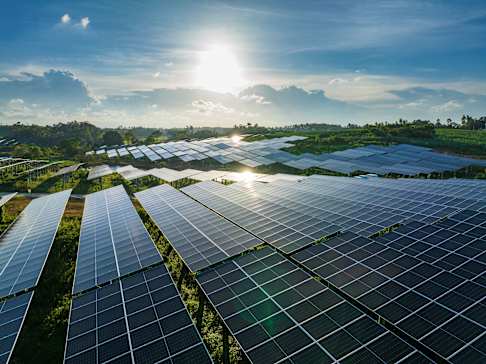
Long story short Data centers are among the most resource-intensive facilities on the planet, and Goldman Sachs predicts that AI will drive an 160% increase in data center power demand by 2030. But with the right strategies – from energy-efficient hardware to circular economy principles – they can dramatically reduce their environmental footprint while improving operational performance. Why it matters As AI workloads explode and regulatory pressure intensifies, sustainability is no longer optional. It’s a business imperative that affects everything from operating costs to customer relationships to social license to operate. Increasingly, sustainability initiatives benefit both the planet and the bottom line: the two are not mutually exclusive. In fact, a recent Accenture report found that organisations that prioritise ESG generate up to 2.6 times more value for shareholders than their peers. The complete picture The data center industry faces a sustainability reckoning. According to the U.S. Department of Energy, data centers consumed around 4% of total U.S. electricity in 2023, a figure projected to reach 12% by 2028. Meanwhile, global e-waste is expected to hit 74.7 million tonnes by 2030, with data center equipment contributing significantly to this total. These aren’t just environmental problems. They’re business problems. Rising energy costs, tightening regulations, and growing customer expectations around sustainability are forcing data center operators to rethink every aspect of how they design, build, and operate facilities. Plus, there is considerable variation across regions; different attitudes in the U.S. compared to Europe, for example, impact everything from regulations to corporate planning. This complicates an already challenging landscape. The good news: there are proven strategies that can significantly reduce resource consumption while improving performance. From liquid cooling and renewable energy integration to circular economy principles, the toolkit is available. The challenge is implementing these solutions at scale while maintaining the reliability and performance that customers demand. “Modern data centers should be designed with energy optimization as a core principle, not an afterthought.” Rethinking energy from the ground up Energy efficiency starts with infrastructure design. Modern data centers should be designed with energy optimization as a core principle, not an afterthought. This means everything from server selection to cooling architecture to power distribution must be evaluated through an energy lens. Physical infrastructure complements these digital systems. For example, we’re seeing data center operators becoming energy generators, tapping into renewable energy sources. This is based on the natural resources available in each region – a hot climate is suited to solar panels, while Scandinavian data centers often use hydroelectric or geothermal energy. By deploying battery energy storage systems (BESS), they can address the intermittent nature of renewable supply. Energy solutions also lend themselves to circular operating models. For example, batteries that no longer have sufficient capacity to be used in electric vehicles can be redeployed in BESS systems. Through collaboration between data center operators, energy providers, and other sectors, we can find new solutions for sustainable energy generation, storage, and use. Cool under pressure Cooling accounts for approximately 40% of data center energy consumption. It’s also one of the areas where innovation is having the biggest impact. Traditional air cooling is being supplemented and, in some cases, replaced by liquid cooling solutions that can handle the extreme thermal loads generated by AI accelerators. Liquid cooling isn’t just more efficient. It enables higher-density compute configurations that would be impossible with air cooling alone. This means more computing power per square meter, which translates to better land utilization and smaller physical footprints. However, liquid cooling it is resource intensive in its own way. According to the IEA, data centers’ annual water use will reach 1,200 billion litres each year by 2030, while building in water-scarce regions is projected to rise by 63%. But cooling innovation goes beyond technology. It also involves rethinking cooling strategies holistically. This includes using outside air economization when weather permits, optimizing airflow to eliminate hot spots, and deploying AI-driven controls that dynamically adjust cooling based on real-time thermal loads. “The secret to achieving sustainability goals is to consider infrastructure across its lifecycle.” Designing for the full lifecycle The secret to achieving sustainability goals is to consider infrastructure across its lifecycle. This starts with procuring systems that have certified sustainability credentials. Providers should be looking to reduce the emissions associated with the production, transportation, and installation, as well as operations and end of life recycling. For example, Hitachi’s data storage systems have seen a 96% reduction in energy use across the value chain.
Case study La Molisana La Molisana, an Italian pasta manufacturer exporting to more than 100 countries, put this into practice when modernizing their data infrastructure. By implementing Hitachi VSP One Block – which is ENERGY STAR certified – the company achieved a 30% reduction in energy consumption while simultaneously improving performance with 2.5x faster response times.
Waste reduction at the start of a lifecycle can be as simple as reducing packaging. Prefabricated systems that are assembled directly in racks avoid the need for excess material use. Equally, containerized solutions can simplify construction, while reducing infrastructure’s impact on land, local communities, and resources. These shifts might seem relatively minor. But if implemented across the entire value chain, these marginal gains make a real impact in waste and emissions reduction. End-of-life considerations matter, too. Equipment should be designed for disassembly and component reuse. Materials should be recyclable. And operators should have clear partnerships with recycling facilities that can properly handle e-waste.
Case study Gijima Physical consolidation delivers immediate sustainability wins. Gijima, a South African ICT company hosting business-critical systems for over 1,000 clients, replaced bulkier spinning-disk arrays with all-flash storage systems from Hitachi. The result: a reduction from nine racks to three in its production data center, leading to a 66% reduction in power, cooling, and space requirements.
What’s next? Sustainability in data centers isn’t a destination; it’s a journey of continuous improvement. As technology evolves and best practices mature, operators will need to keep pushing the envelope on resource efficiency. The data centers that thrive in the coming decade will be those that view sustainability not as a compliance checkbox, but as a source of competitive advantage. Lower energy costs, stronger customer relationships, and better regulatory positioning. These benefits are real, measurable, and increasingly essential for business success.
Own the conversation Ask the big question: Can data centers truly be carbon neutral when AI workloads keep exploding? Or is net zero just a convenient fiction that lets us avoid harder questions about growth limits? Disrupt your feed: Every time we talk about data center sustainability, we focus on the facilities themselves. But what about the devices that access them – billions of smartphones, laptops, and IoT devices that get replaced every few years? How can we optimize on both sides of the equation? Drop this fact: By 2027, the energy footprint of AI models is projected to match a country the size of the Netherlands.